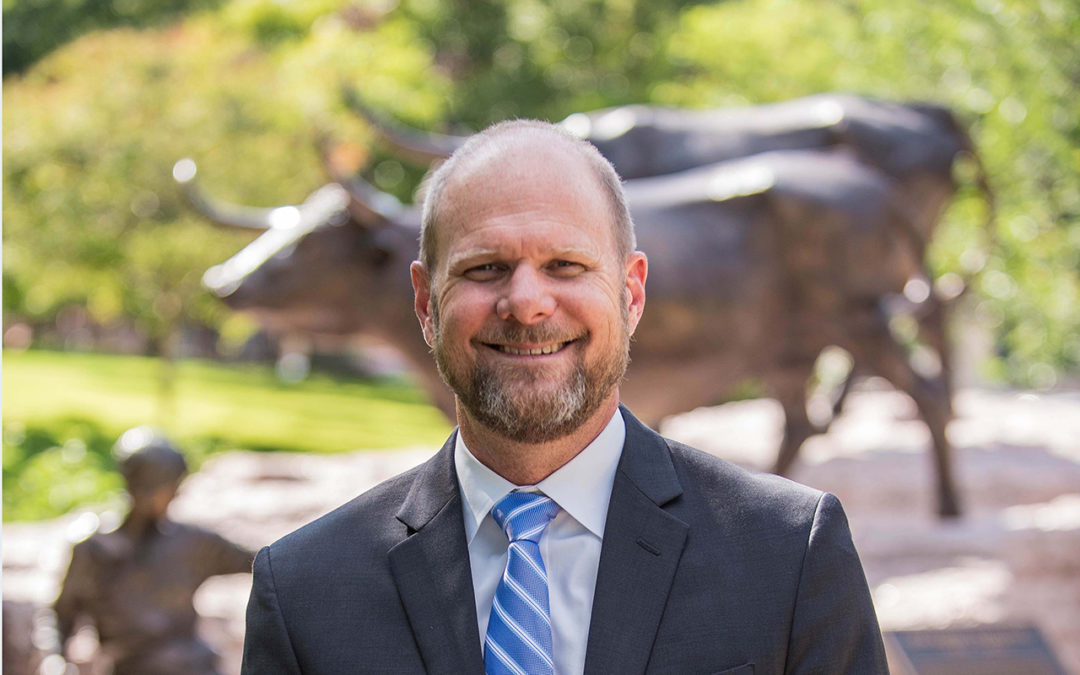
In my first year as a superintendent in 2008, our community engaged in a major strategic planning initiative that included 250 community members, businesspeople, parents, staff and students. It gave us a clear direction for the district.
One result was an understanding that our main purpose was to “design engaging experiences that result in profound learning for life.” For the next 10 years, that was the focus for nearly everything we did. It gave us something to be “for.” It was aspirational, inspiring and motivational.
Two years into it, however, Texas made devastating cuts to public education funding. We had to downsize our staff through attrition, increase class sizes, freeze salaries, and ask our community to pay higher M&O taxes to prevent even more drastic reductions.
The Story of Mr. Lang and His Life-Changing Rockets
Around this time a teacher, Mr. Lang, came to me asking for $1,000 to start an after-school rocketry club. We had hired him the year before to help students who had failed high school courses to get back on track.
As he asked for the money, I thought, “You have got to be kidding me! Are you not aware of the major budget cuts we are making?” But before any words came out of my mouth, he followed up with: “I know how committed you are to every child in our district, and how we are designing engaging experiences that result in profound learning for life. I work with the most at-risk kids in the district, and they aren’t part of anything after school. This club is perfectly aligned to what we say are committed to.” Not surprisingly, I said “yes” and found the money.
In the program’s first year, students built small rockets they shot off in the parking lot, and I witnessed some of our most at-risk students showing excitement for learning. The next year, Mr. Lang asked if he could teach a rocketry class for a science credit in which the students designed and built larger rockets they launched at a ranch. These broke the sound barrier, the students seemed so proud, and I knew we had something special.
Year after year, Mr. Lang added to the complexity of his rocketry classes, getting students to work in teams to design and build a 22-foot-long rocket that weighed 600 pounds and was designed to travel 100,000 feet at Mach III (three times the speed of sound). When I visited the class, I saw students walk in and go straight to work, working in teams on different parts of the rocket. Mr. Lang didn’t do any direct teaching; he asked thoughtful questions to guide his students’ thinking. Sometimes he let them go down a wrong path so they could learn for themselves that a different path was needed.
The students did their own research, secured donations for a machine shop, invited NASA engineers to do critical design reviews, and traveled to White Sands Missile Range in New Mexico to launch their rocket. The military base closed off 900-square miles of air space for the occasion. It was perhaps the most amazing educational experience I have ever witnessed.

Mr. Lang and his Alamo Heights ISD students at the rocket launchpad in White Sands, New Mexico
Ultimately, Mr. Lang became a full-time science teacher, and his program became so successful that our community supported a bond to build a new facility for rocketry. We even added a middle school STEM building to build a pipeline of students.
One year, Mr. Lang arranged for his students to have an uplink with the International Space Station (ISS) where they could interview American astronauts. About 100 students gathered around a large screen to watch three astronauts float in the ISS and pepper the astronauts with smart questions. It was amazing.
As the event concluded, a student named Erick Castillon came up to me and enthusiastically told me that he wanted to be the first in his family to attend college, that he wanted to be an aerospace engineer, and that one day he wanted to work on the largest rocket in human history, which eventually became the Space Launch System (SLS). The way he said it, I knew he meant it. It was January of his junior year, and I asked him where he had applied to college. His answer was, “I don’t know; when do we do that?” We quickly got Erick to a school counselor to begin college planning and testing.
A couple of years earlier, Erick had told this same counselor that he wanted to drop out of school. He didn’t like it and was planning to work doing landscaping. The counselor informed him that he wasn’t old enough to drop out, and she put him in rocketry. It changed his life.
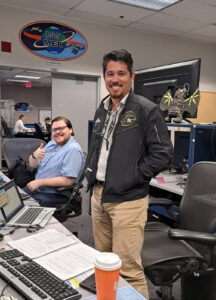
Alamo Heights ISD rocketry program alumnus Erick Castillon at work at NASA
He was accepted by UT San Antonio on an engineering scholarship. The summer after his freshman year, he contacted Mr. Lang to tell him he got a paid summer internship at NASA. Tears flowed for all of us.
The next year he called Mr. Lang to report another paid internship with the promise of working at NASA after graduation. More tears on our end.
But the most tissues were needed on the day Erick called to say: “Mr. Lang, I graduated, and I am now working for the International Space Station and the moon rocket at NASA. I will see you on Mars.”
Folks, that is the power of public education and giving a great teacher the space to innovate. And that is also the power of having a clear vision as a school community about what you are “for.”
A New Vision for TASA’s Next Century — and Texas Students’ Future
What I didn’t tell you before is that when I was a new superintendent back in 2008, my board of trustees and I studied a newly published document, Creating a New Vision for Public Education in Texas, which would later be called the TASA visioning document. So many aspects of that document inspired us, and we used it to launch the strategic planning effort I mentioned before.
The result was a vision for our district that was customized to our community’s goals and needs but grounded in the forward-looking principles articulated in the visioning document. The rocketry program is just one of many examples of the ways our clear vision made a difference in the lives of students in our district.
But as future-focused as the principles in that original visioning document were, times are different than they were in 2008. The last two decades have changed the educational environment and what our students need to flourish now and in their futures. So, we at TASA have launched a new “TASA visioning document.”
The Texas Promise: A Vision for Public Education is an aspirational document — a refresh of the original visioning document that represents the collective wisdom of educational leaders from across Texas. It doesn’t contain all the answers, and it doesn’t pretend to tell local school districts or communities how to manage their own affairs. What it does is set out some bold thinking that will hopefully inspire you and your community to innovate and create something special that serves YOUR children and community. We also hope that it will inspire lawmakers to create policy that best serves children. The Texas Promise calls for leadership grounded in integrity, systems built on trust, and classrooms alive with learning, innovation and human connection.
Learn more about it at tasanet.org/the-texas-promise.

Erick Castillon, Colin (Mr.) Lang, and Erick’s brother Jaziel Varela, who is currently following
in his brother’s footsteps studying engineering
at UTSA
There are so many Ericks out there who thirst for engaging experiences that inspire learning, and there are plenty of Mr. Langs who need the space and support of administrators and lawmakers. We have the privilege of serving them exceptionally well when we stand together, plant our flag for what we are “for,” and work collectively on behalf of our children and local communities. The future of our children, our communities, our democracy, our economy, and our freedoms lies in innovative public schools.
I got to reconnect with Mr. Lang when writing this story. He retired recently but sang the praises of the new teacher. In an important side note, Erick’s younger brother is following in his footsteps in the rocketry program and now studying engineering in college. The success continues because the vision belongs to the community, the teachers and even the students.
As I travel all corners of Texas, I see great work happening in schools. Your inspirational stories don’t always get told publicly, but they are so powerful. My hope is that your collective wisdom, reflected in The Texas Promise, will inspire even greater innovations for all the children of Texas.
Let’s make it happen!
-TASA Executive Director Kevin Brown, Ed.D.
READ MORE POSTS