
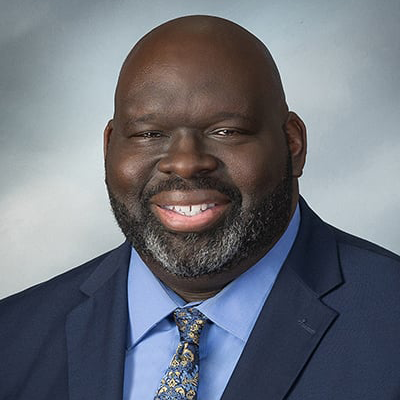
 Roosevelt Nivens is superintendent of Lamar CISD, the 2026 National Superintendent of the Year and the 2026-27 TASA President. This article originally appeared in the fall 2026 issue of TASA INSIGHT.
There is an analogy I heard recently that has stayed with me. A turtle and a giraffe can occupy the same space and see two completely different worlds. The turtle sees what is directly in front of it. Its perspective is close to the ground. The giraffe, standing in the very same place, can see above the trees and much farther into the distance. Neither perspective is necessarily dishonest. They are simply seeing from different vantage points.
Upon hearing this, I immediately thought about leadership.
If you have served in public education for any length of time, you know what it feels like to be criticized.
Make a difficult decision, and someone will disagree with it. Announce a new initiative, and someone will question why you are doing it. Post good news about your district, and it sometimes takes only minutes for the comments to become a stage on everything someone believes is wrong with public education.
And if we are not careful, we can begin leading from the comment section. I understand the temptation.
We care deeply about the communities we serve. Most educators did not enter this profession because we are indifferent to what people think. We want to do good work. We want people to understand our intentions. And when our motives, decisions, or even our character are questioned, it can hurt. But leadership requires discernment.
Not every criticism should be ignored. In fact, some of the most important growth in my leadership has come from people willing to tell me something I did not necessarily want to hear.
We should listen. We should remain humble enough to ask whether there is truth in the criticism. We should correct course when necessary.
But listening is different from surrendering our direction.
There will always be people evaluating decisions from the ground immediately in front of them. They may see one classroom, one experience, one tax bill, one social media post, one decision, or one moment in time.
As leaders, we are responsible for seeing those things and looking farther down the road. We have to see the child entering kindergarten today and the workforce that child will enter more than a decade from now. We have to think about the teacher standing in a classroom today and whether we are building a profession talented people will still choose tomorrow. We have to make decisions for students we may never meet and solve problems our communities may not fully experience for years.
That is the giraffe’s responsibility.
The danger comes when the voices closest to the ground convince us to lower our vision.
I have watched good leaders become discouraged because a handful of comments made them question work that was producing meaningful results for thousands of children. I have watched leaders spend enormous amounts of energy responding to the loudest voices while the people quietly depending on them to lead received less of their attention.
We cannot do that.
A comment section is not a scientific sample of your community. The loudest voice is not automatically the most representative voice. And criticism is not always evidence that you are moving in the wrong direction.
Sometimes leadership means having enough humility to listen and enough conviction to keep going.
Texas public education needs leaders who can do both.
So, when criticism comes this year, and it will, read it with discernment. Look for the truth in it. Learn what you can. Make adjustments when they are warranted. But do not allow someone else’s limited view to determine how far you are willing to see.
There are children depending on us to keep looking beyond what is immediately in front of us.
Keep your eyes up. Keep your vision long. And keep doing the work.
Why … because our students deserve it and they deserve you!
MORE LEADERSHIP PERSPECTIVES